Table of contents
Open Table of contents
Introduction
Becoming an IEEE Senior Member is a major milestone that recognizes professional maturity and technical leadership. It is a distinction held by only the top 10% of members worldwide. While the path requires meeting strict criteria, the process itself is a valuable opportunity to reflect on your career achievements.
In this article, I will share my personal journey of achieving this elevation. I will walk through the application process from documenting “significant performance” to securing professional references. I will also break down the costs and highlight the benefits that come with this prestigious rank.
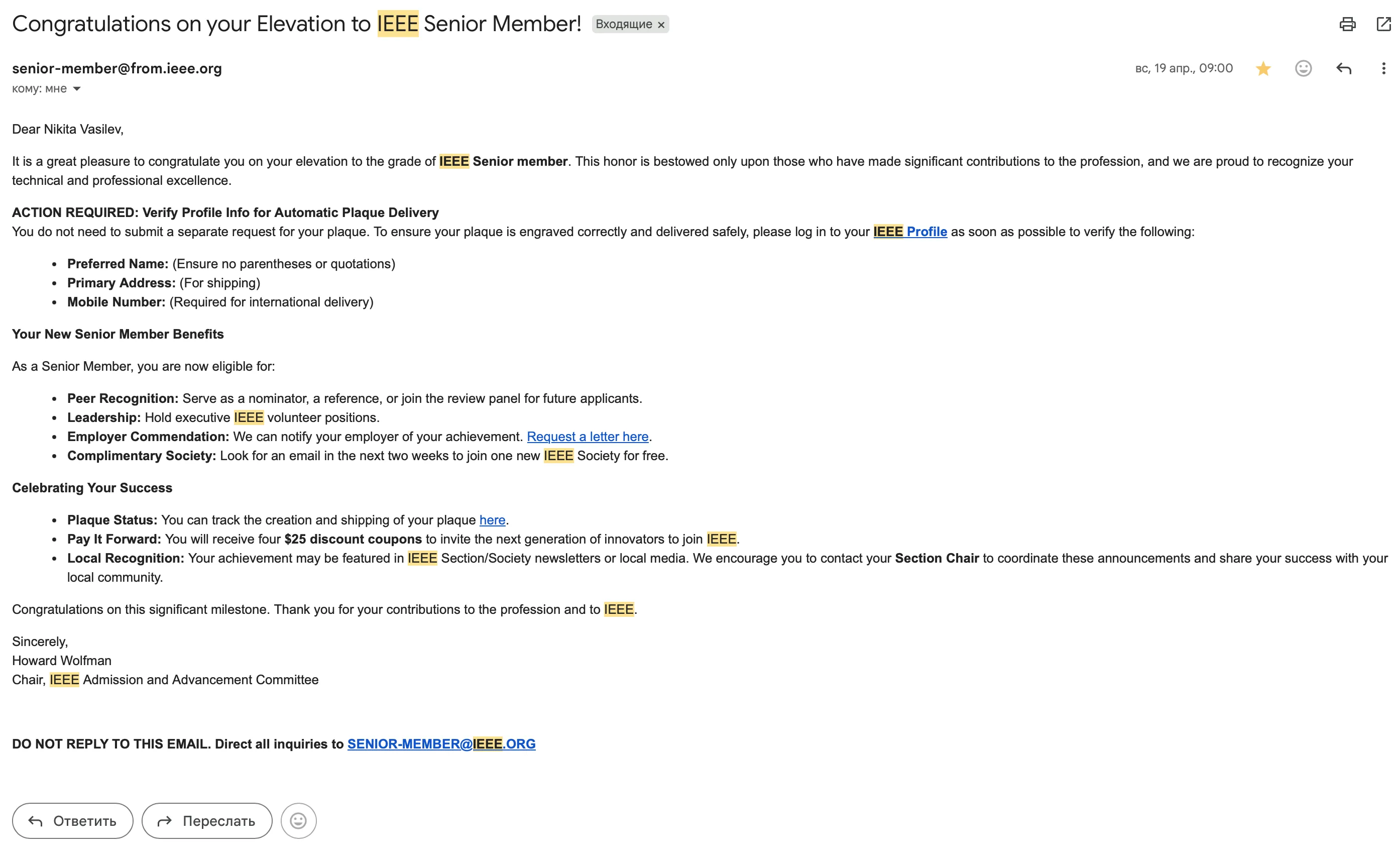
I joined the IEEE as a member on March 11, 2026, and was elevated to Senior Member on April 19, 2026 - just 39 days later.
What is IEEE Senior Membership?
The Institute of Electrical and Electronics Engineers (IEEE) is the world’s largest technical professional organization. For an engineer, it is more than a source of journals or conferences. It is a global ecosystem of experts, standards, and innovations.
IEEE membership is structured into several tiers, each representing a different stage of a professional career:
- Student Member: For those just starting their journey in academia.
- Member: The standard grade for practitioners and researchers.
- Senior Member: The highest grade for which a member can apply. It requires ten years of professional experience and five years of “significant performance.”
- Fellow: A prestigious grade reserved for those with extraordinary records of accomplishments, attainable only through nomination.
Membership Costs
Membership dues vary by region and career stage. Typically, professional membership costs around $160–$200 annually, with significant discounts for students, retirees, and members in developing countries. When applying for Senior Member elevation, there is no additional application fee : and the IEEE even offers a $25 voucher toward a new society membership upon approval.
Joining the IEEE: Timing and Membership Options
If you are considering joining, it is worth paying attention to when you sign up. IEEE membership operates on a calendar year basis (January 1 - December 31), which means dues are structured according to the season.
The Mid-Year Discount
One nuance that many newcomers overlook is the pro-rated membership fee. If you join mid-year (typically starting in March or August), the IEEE offers a discounted rate for the remaining months. This makes it much more cost-effective to join halfway through the cycle rather than waiting for the new year to begin.
Traditional vs. Paperless Membership
During registration, you can choose between a standard or Paperless membership. I chose Paperless for two reasons:
- It is slightly cheaper.
- It is more practical in a digital-first world.

The only trade-off is that you won’t receive a physical membership card instead, you get a digital PDF version in your dashboard. For me, that was no issue at all.
Elevating to Senior Member
Achieving Senior Member grade is a peer-review process. You don’t just present a resume - you build a case for your professional maturity.
The Core Requirements
To be eligible, you must satisfy the following:
- 10 Years of Professional Experience: Your educational background counts. Depending on whether you have a Bachelor’s, Master’s, or PhD in an IEEE-recognized field, you can credit several years toward this requirement.
- 5 Years of Significant Performance: The most subjective and crucial part. You must demonstrate leadership, substantial technical contributions, or innovation that moved the needle for your company or the industry.
- 3 References: At least three recommendations from current IEEE members who hold the rank of Senior Member, Fellow, or Honorary Member.
The Application Portal
You can submit your application through the Official IEEE Senior Member Elevation Portal. The interface is divided into several tabs:
- Education: Details about your degrees.
- Professional Experience: A chronological list of your roles.
- Significant Performance: Detailed essays or descriptions of your key achievements.
- References: A list of qualified IEEE members (Senior Member grade or higher) who will vouch for your professional standing and performance.
How I Structured My Application
When describing my experience, I made sure to use the Action → Result formula throughout. Below is exactly how I presented my background to the committee.
Professional Experience Summary
I listed my career path from early roles to my current position, showing a clear progression from developer to architect and leader.
[Company Name Withheld] · Senior iOS Developer · Full-Time · May 2022 — Dec 2023
Led the development of a mobile payment solution and payment infrastructure.
Demonstrating “Significant Performance”
This is where I spent the most time. I broke down my achievements into specific projects, providing concrete numbers and proof. Here is one highlight from my application:
Bumpd Dating App · Lead Mobile Developer / Architect / Co-Founder United States (remote) · Dec 2022 — Dec 2025
Built the mobile application from scratch for the U.S. market, designing the architecture and implementing core product functionality, user interaction mechanics, and mobile infrastructure.
📎 Proof: Supporting letter from the founder.
The Importance of Proof
For every major claim, I attached evidence. This included:
- Supporting Letters: I requested letters from former CTOs and Founders (even if they were in Russian, I noted that they could be verified via translation tools).
- Public Links: Certificates from the Globee Awards, GitHub repositories, and links to my profiles in professional directories.
- Recommendations: I secured three strong references from existing Senior Members who could confirm the “Significant Performance” I described.
The Review Process and Timeline
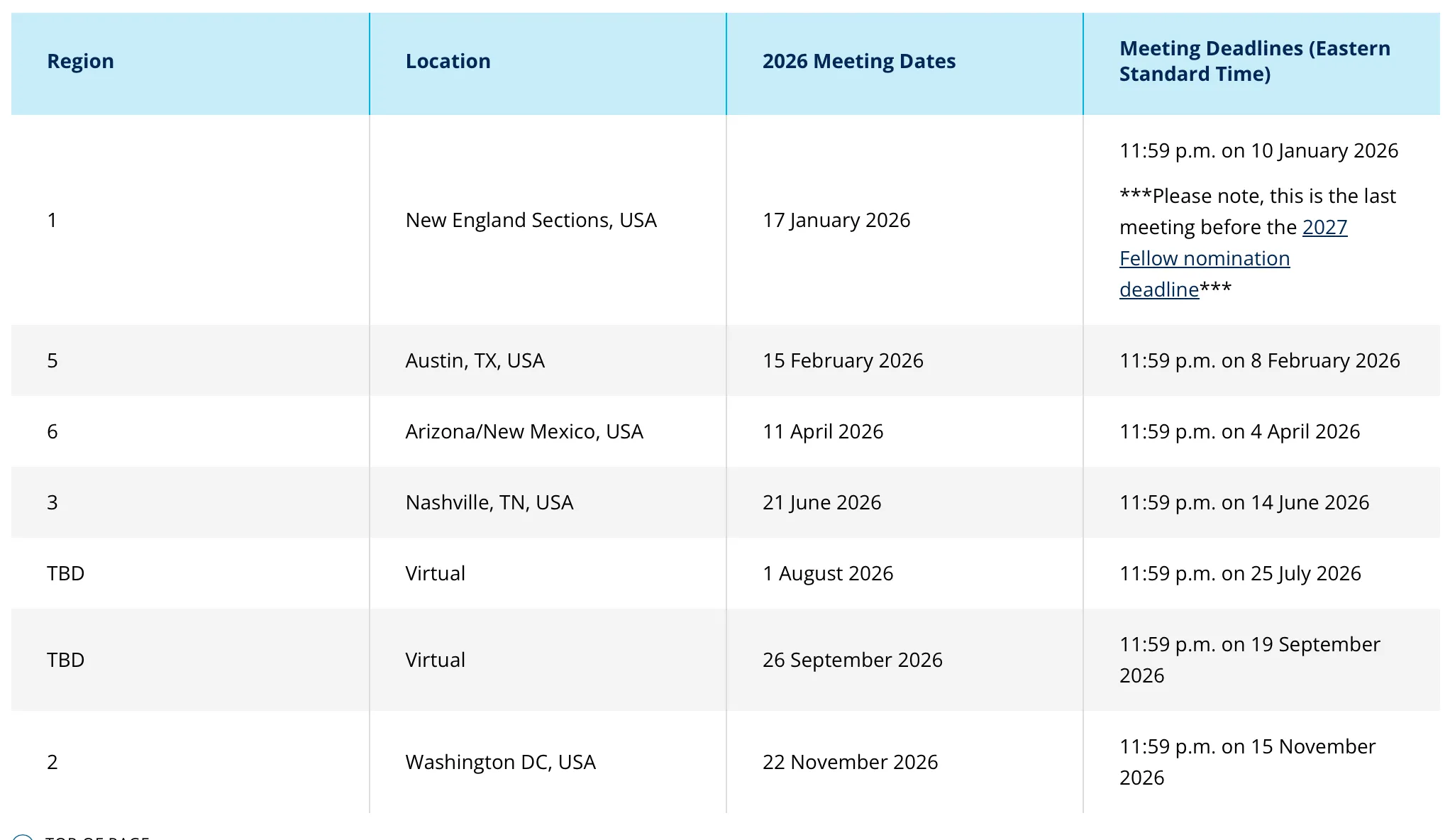
Applications are not reviewed instantly. They are evaluated by the IEEE Admission and Advancement (A&A) Review Panel, which meets only a few times a year.
The Review Schedule
The exact schedule of panel meetings is published on the official IEEE website. It is a good idea to check these dates before submitting, so you have a rough idea of when to expect a decision. Depending on when you hit “submit,” the wait can range from a few weeks to a couple of months.
My Timeline
| Event | Date |
|---|---|
| Application Submitted | March 11, 2026 |
| Result Received | April 19, 2026 |

The total turnaround was 39 days remarkably fast. Shortly after the email notification arrived, my profile in the IEEE member directory was updated and the “Senior Member” badge appeared next to my name.
Benefits and What Comes Next
Upon elevation, you gain access to benefits exclusive to the Senior Member grade including enhanced professional recognition, eligibility for IEEE leadership roles, and access to grade-specific resources and communities. The $25 society membership voucher is a nice bonus to explore a new technical area.
I was elevated only recently, so I am still in the process of exploring all that Senior Membership has to offer. That said, the recognition itself has already opened new conversations both within the IEEE community and professionally. I will share a more detailed account of the benefits once I have had time to experience them firsthand.
Conclusion
The IEEE Senior Member elevation is a meaningful investment in your professional identity. The process took me just 39 days from application to approval far faster than I expected. If you have the years and the achievements, I encourage you to document your journey and apply. The recognition is well worth it.